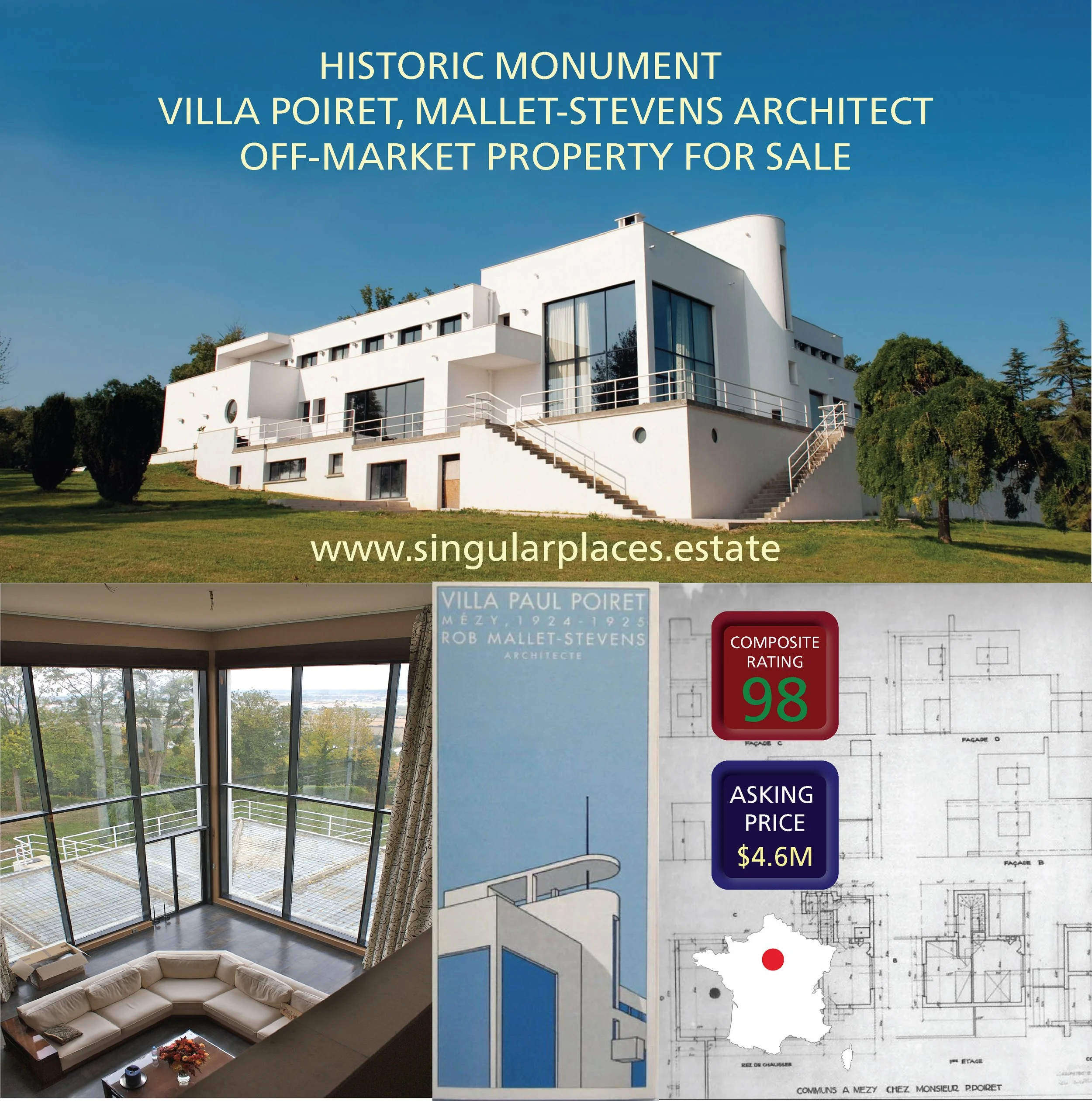
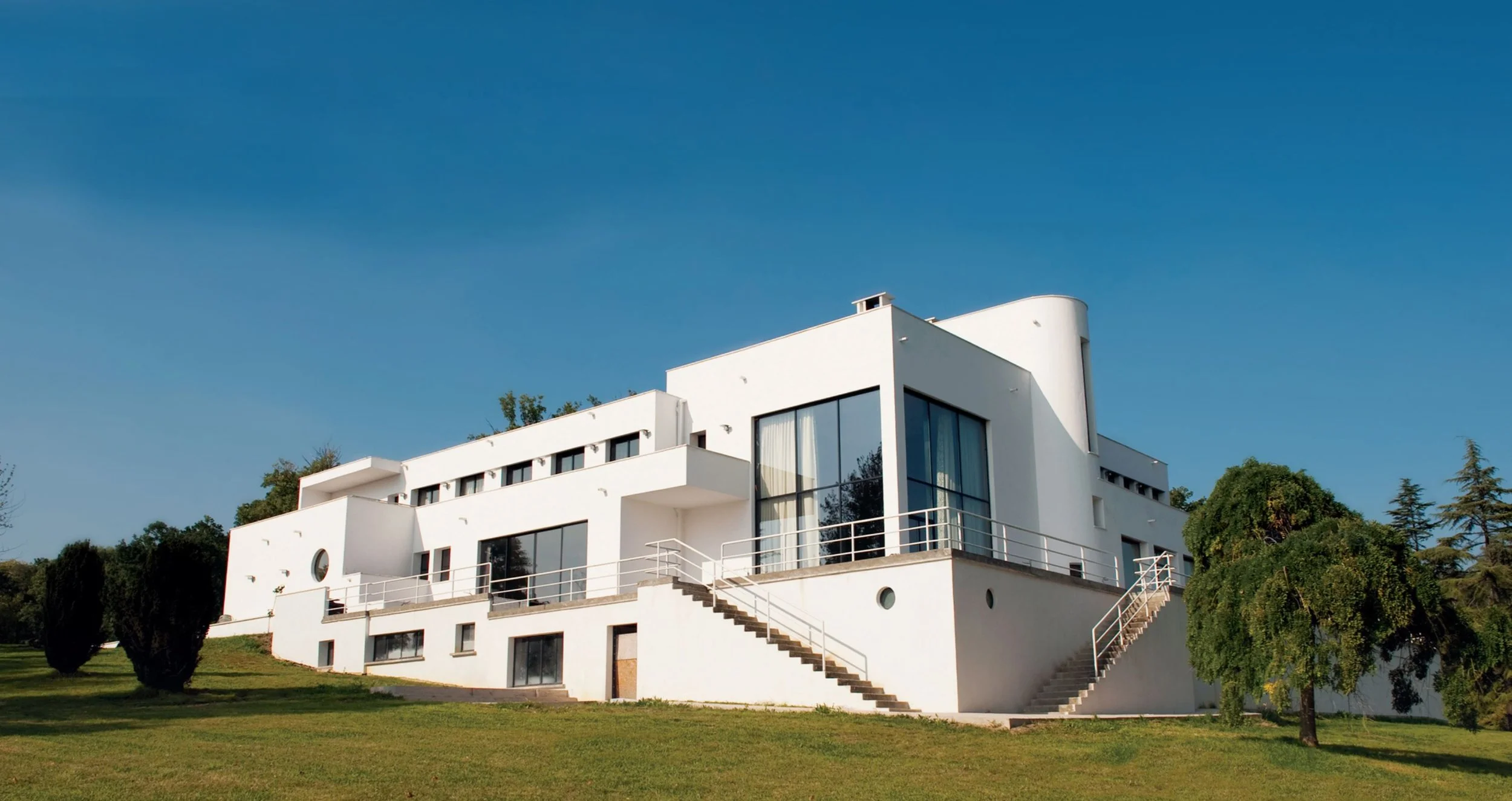
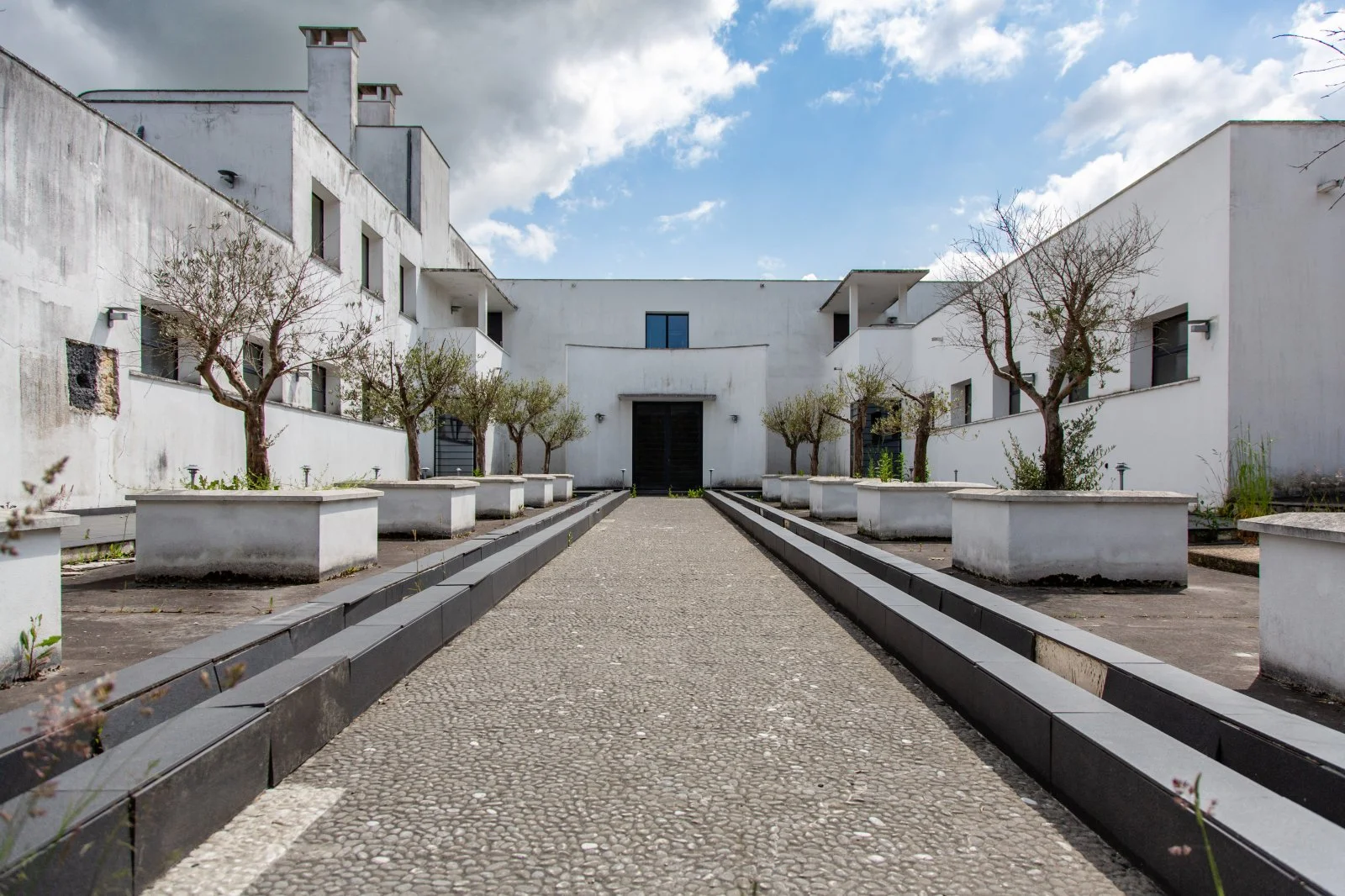
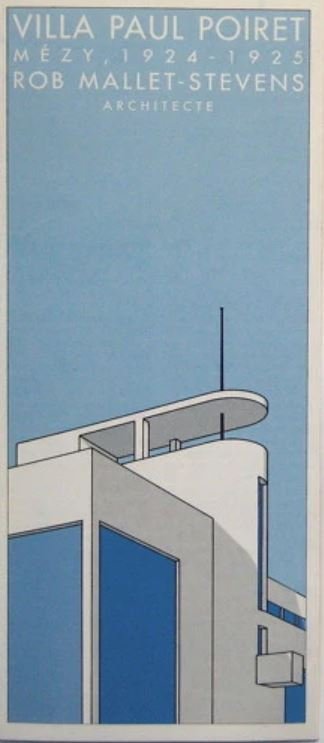
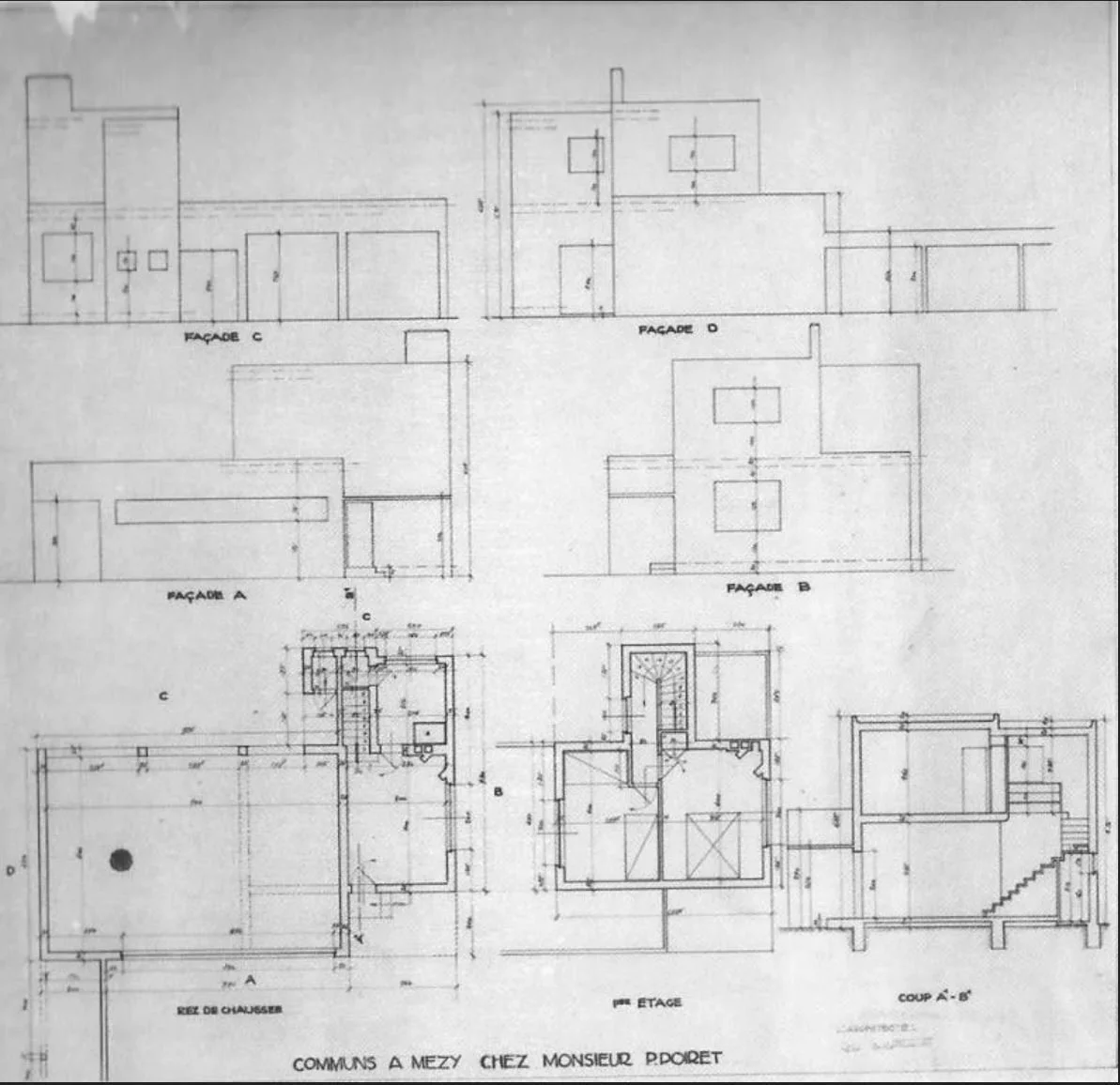
Perched high at an altitude of approximately 120 meters, it offers a panoramic view of the surrounding wooded hills and the Seine valley. It was built with new materials for its era: reinforced concrete. Mallet Stevens organized the house horizontally around a patio, with the glass-and-metal double-door entrance at the back. Inspired by the Cubist gardens at the villa Noailles, the large patio is decorated with a double row of six olive trees planted in large square planter boxes. At the foot of the olive trees, two slightly sloping furrows lined with pebbles stretch.
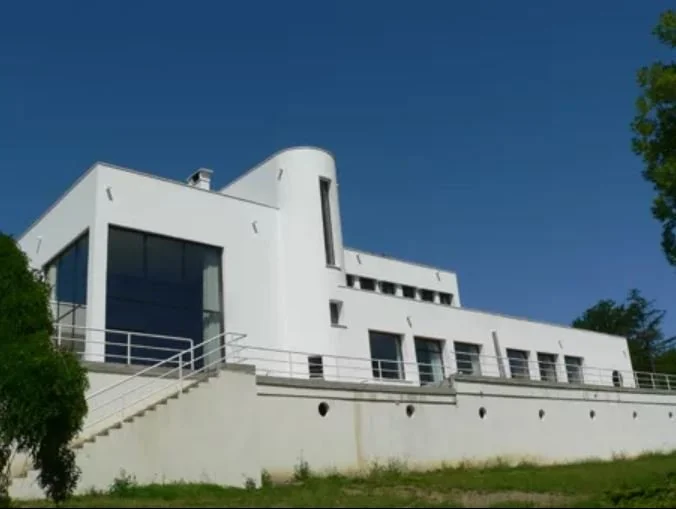
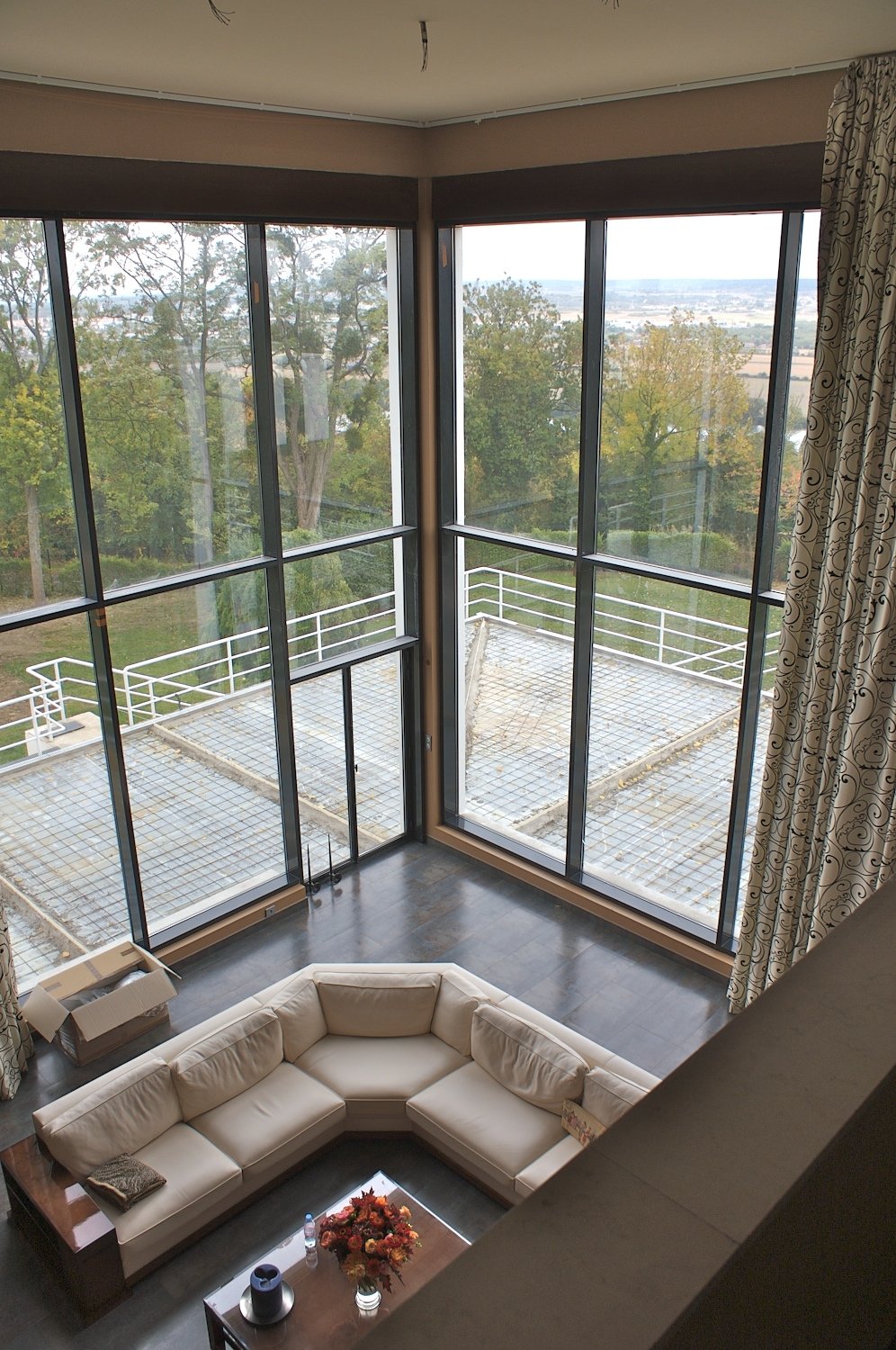
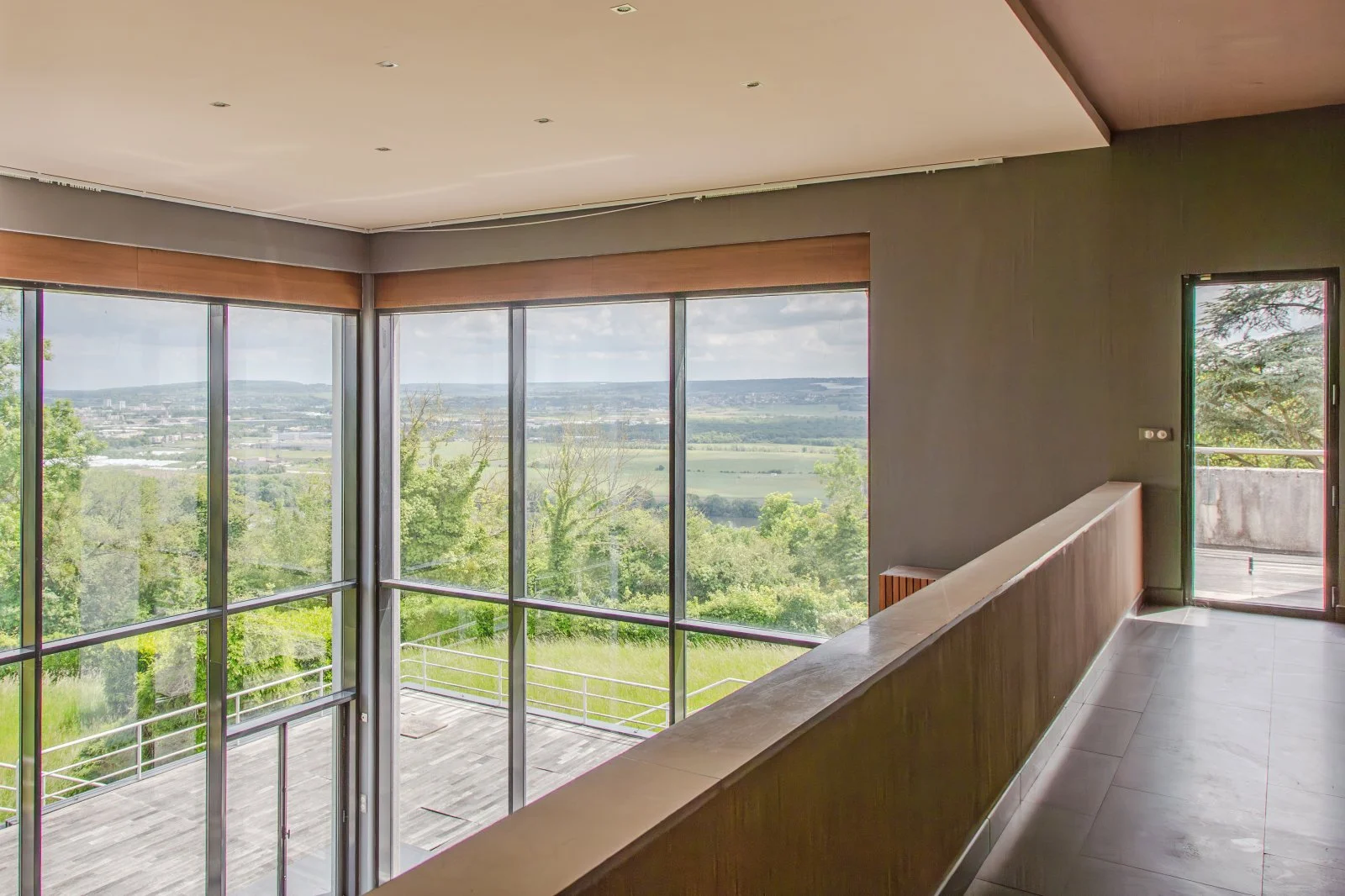
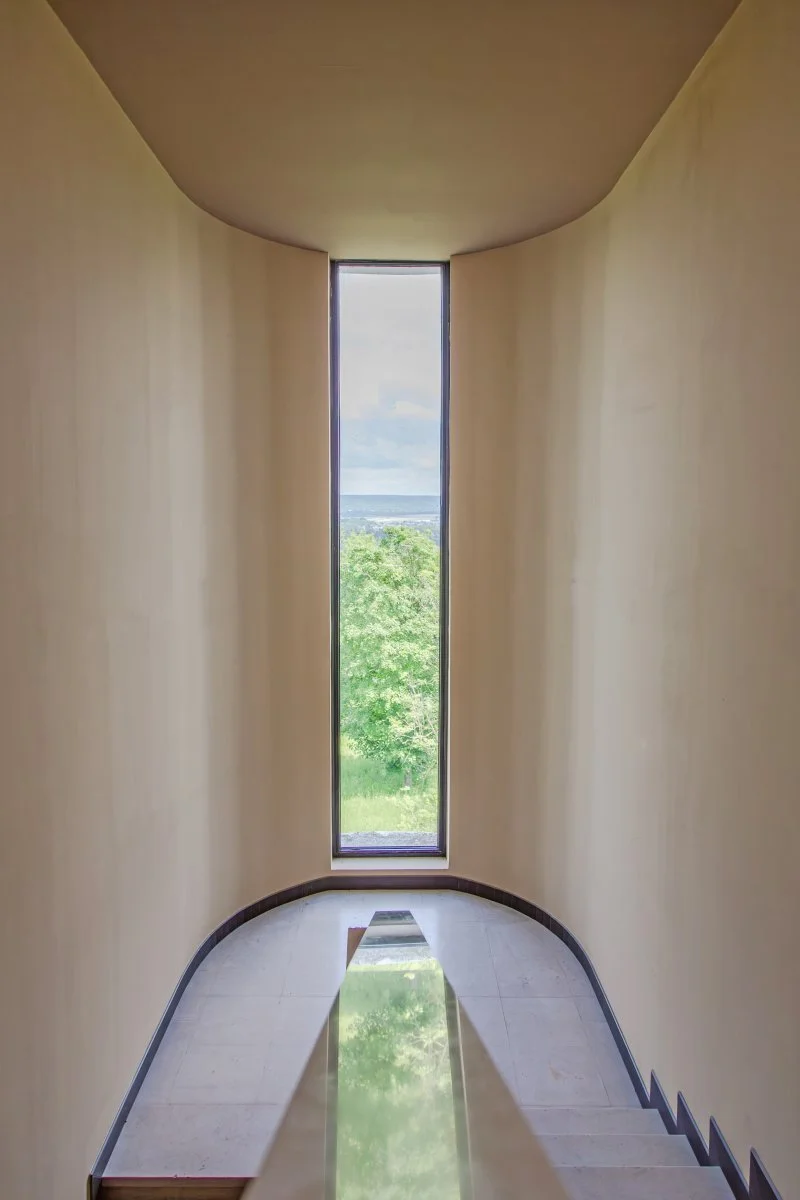
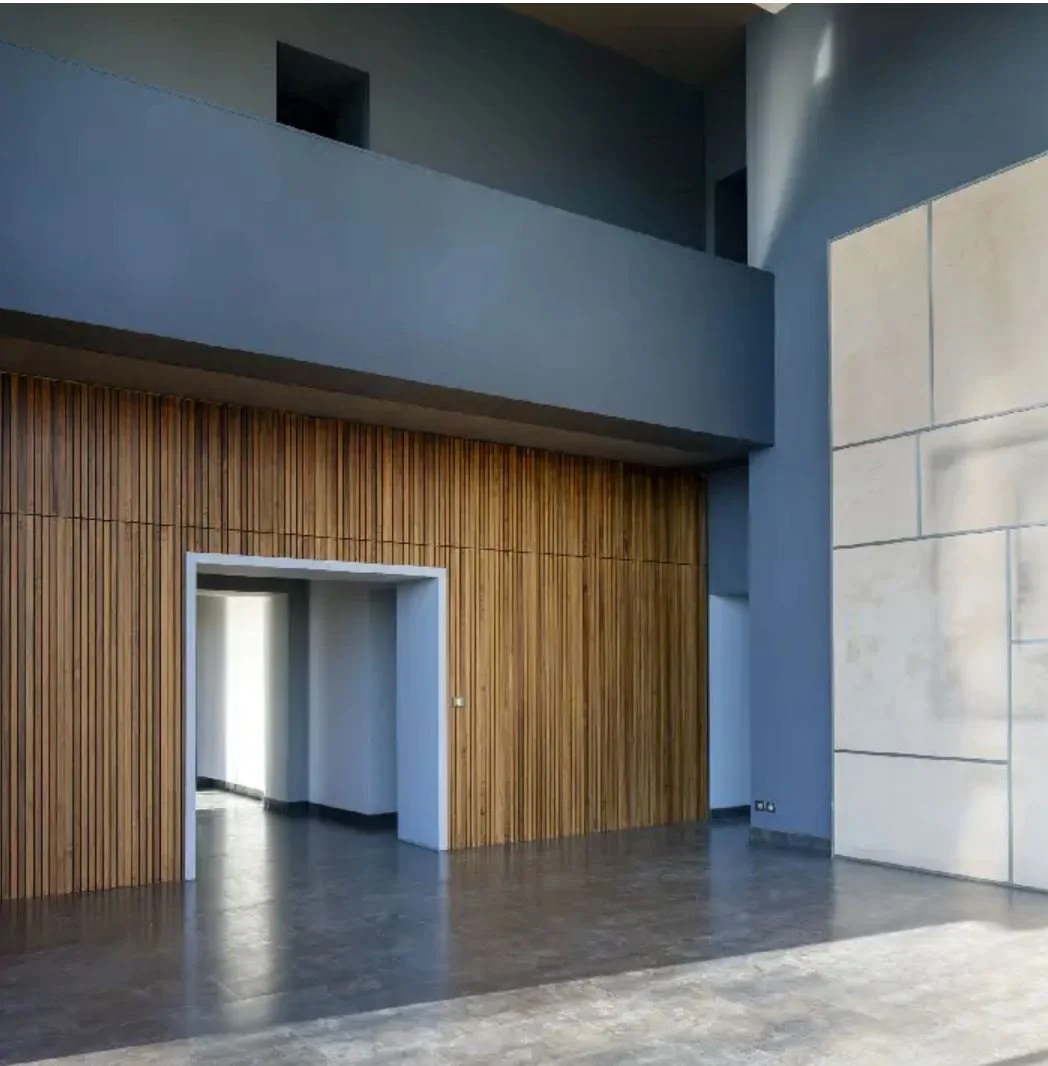
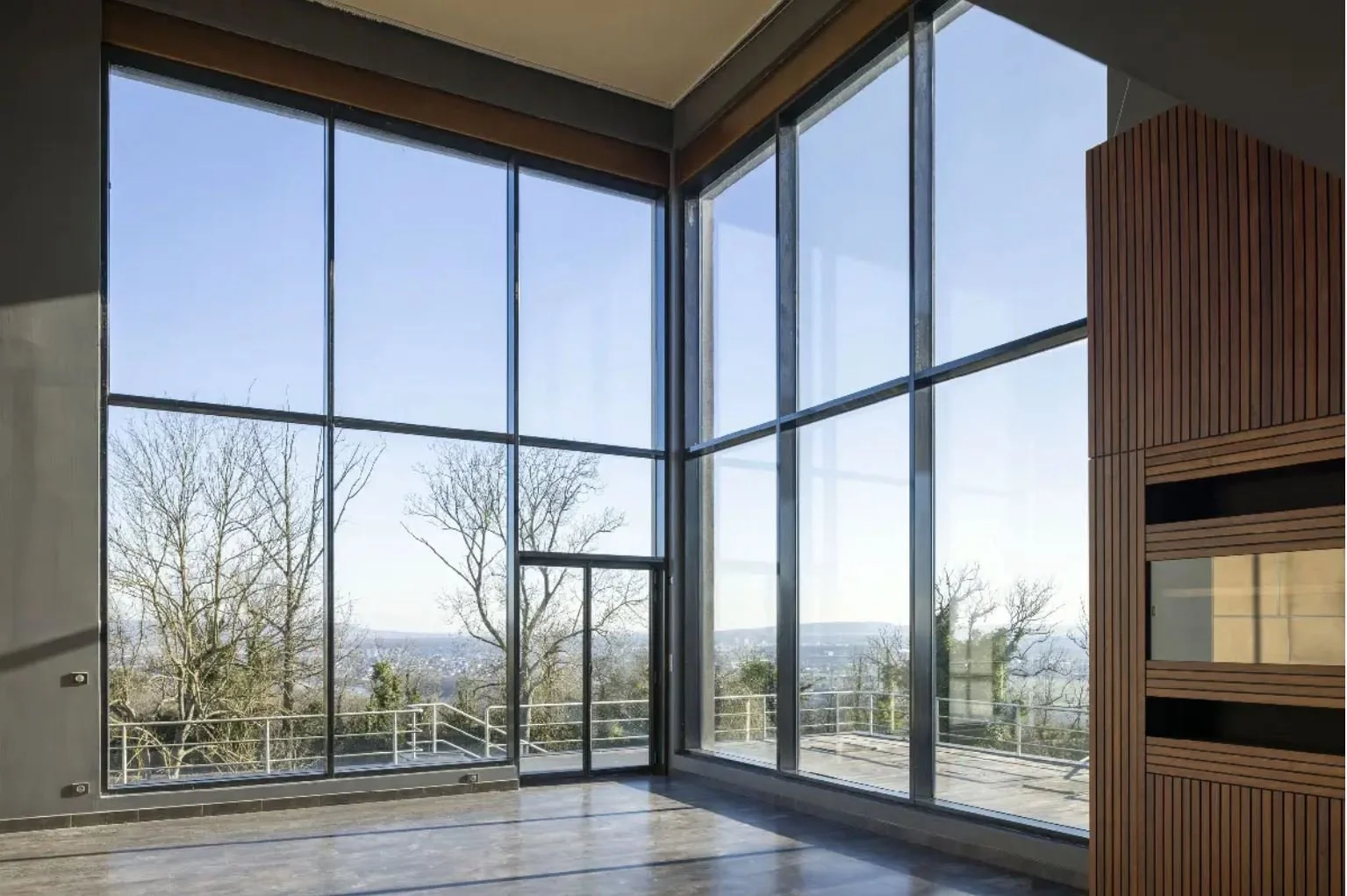
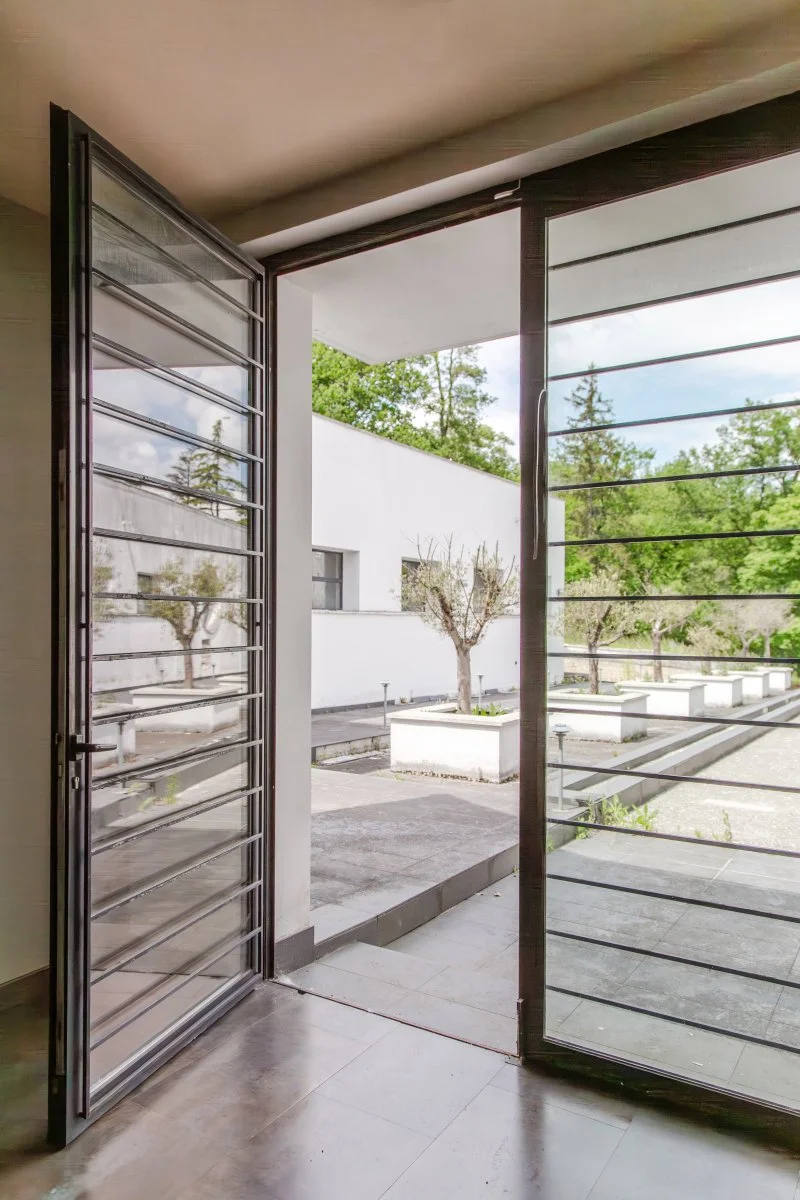
Listed as a historical monument, the villa presents a living area of approximately 800 m², surrounded by 1,000 m² of tiled patios. The vast façades are endowed with wide picture windows and topped with roof terraces, both characteristic of the Art Deco style. The architect Paul Boyer added bull’s-eye windows to the southern base-level façade, as well as a ship railing to the southern and east patios, which gave the villa its “ocean liner” nickname—the ground floor. From the vast entrance hall, an opening on the left leads to the living room, with a floor-to-ceiling height of 7.10 meters, bathed in light from tall, wide black metal-framed picture windows oriented southeast and forming a right angle with each other. In the corner of the tall window on the eastern side, a glass double door provides access to large exterior patios that surround the villa's eastern side and a portion of its southern side, allowing full enjoyment of nature and the view. From there, a V-shaped staircase leads to the grounds. Back in the entrance hall, the stone double quarter-turn main staircase leads to an arched intermediate landing with large stone tiles. An opening leads to the east wing, where a long hallway provides access to an office and an adjacent living room bathed in light from large picture windows that face the eastern patio. At the end of the hallway is a bathroom, a lavatory, two bedrooms, and a wardrobe, which leads to a bathroom with a lavatory.
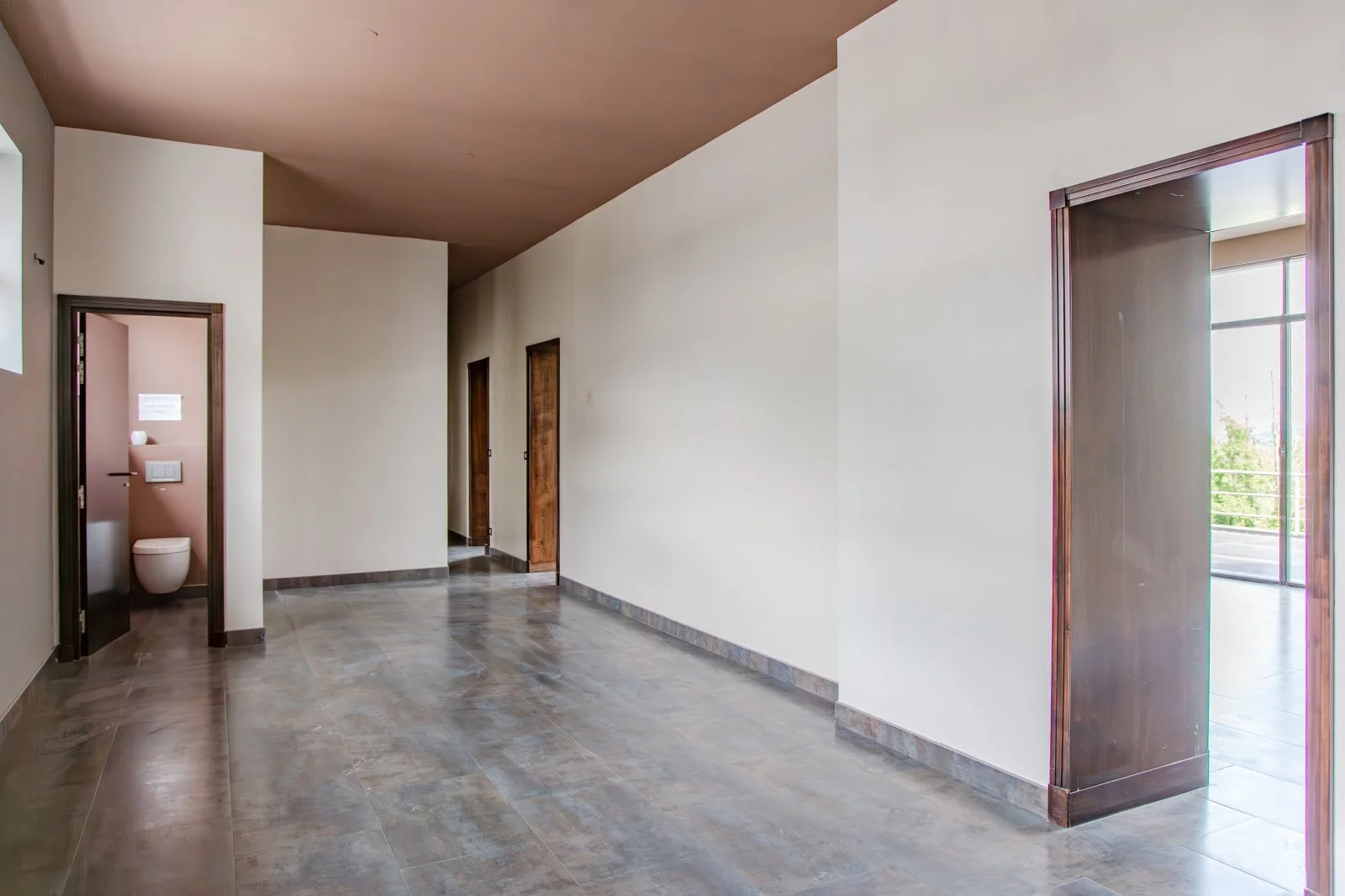
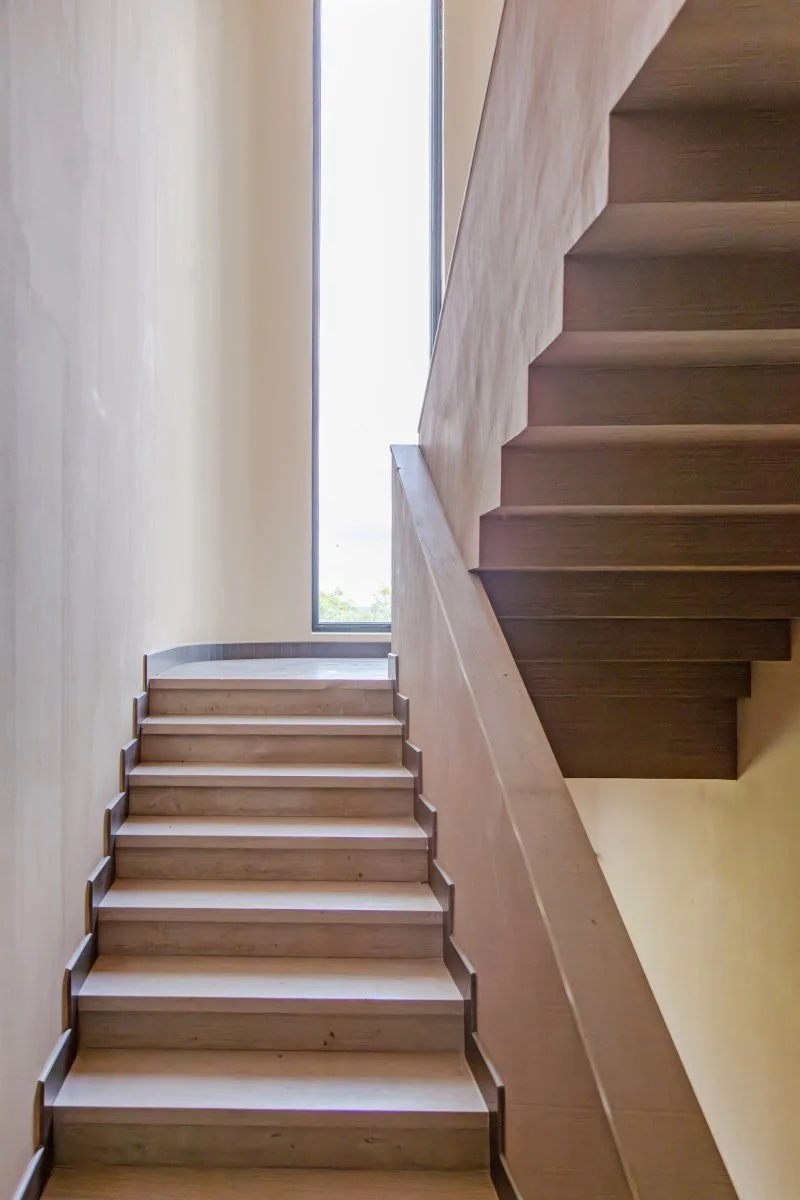
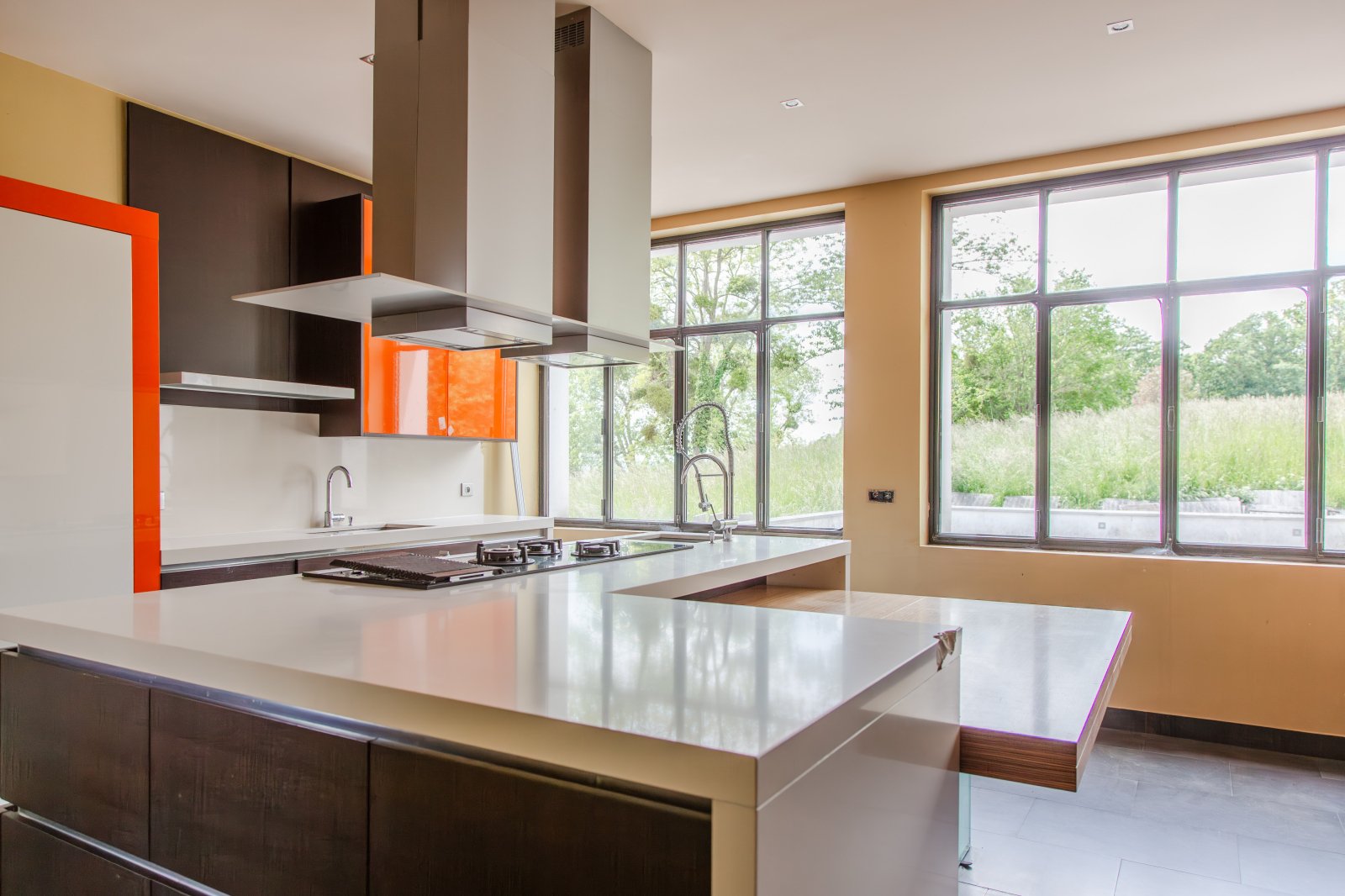
Back in the entrance hall, facing the front door, an opening leads to two adjacent dining rooms. The first, which is larger, is flooded with light by large picture windows that open onto the southern patio. In the second, a separate staircase leads to the basement. A doorway provides access to a kitchen illuminated by tall windows that face the grounds to the west. This room then leads to an office with a glass door opening onto the western patio, as well as a laundry room and a storeroom. Extending from the office, a door leads to the western wing. In the hallway that follows, another staircase, adorned with a wrought-iron guardrail, leads to the first floor and is bathed in light by a large bull’s-eye window that reveals a view of the grounds. Below the staircase, a door leads to a lavatory. Further on is an office, and facing it, a second staircase provides access to the basement. A hallway leads to three bedrooms with views of the grounds. On this level, as in the rest of the villa, the floors are covered in large dark tiles with matching skirting boards. The first floor. Via the main staircase, a landing illuminated by a narrow vertical window facing southward leads, on the left, to a glass door opening onto the west wing’s roof terrace. A hallway leads to a bathroom, a lavatory, and two bedrooms. Back on the landing, a door leads to an interior walkway covered in large dark tiles that overlooks the main living room. A vast corridor then leads to the eastern wing, which comprises a bathroom, a lavatory, a living room, and two bedrooms with glass doors opening onto the patio. At the end of the west wing, the staircase, illuminated by the bull’s-eye window, provides access to the ground floor. The second floor. Accessible from the main staircase, a landing room provides access to the terrace on this level.
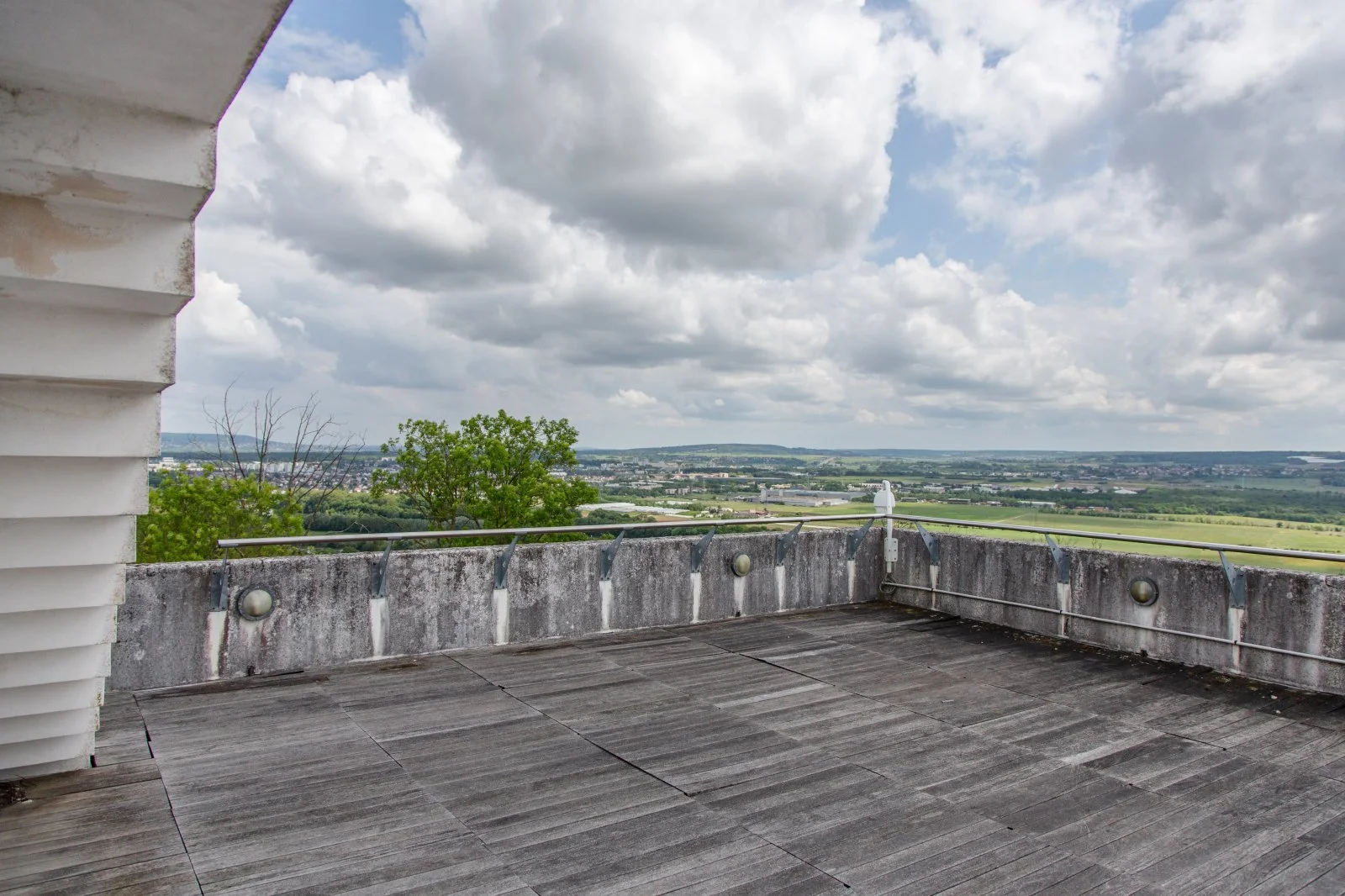
From the latter, a staircase leads to a lookout point with a 360° view, recalling a ship’s railing thanks to its stainless-steel guardrail. To the southeast, the view is unobstructed all the way to Paris, where the Eiffel Tower, the Basilica of Saint-Denis, and Sacré-Cœur can be seen on the horizon. The basement, with a surface area of approximately 800 m², is accessible via two interior staircases and consists mainly of cellars for conversion. In one of them is a vast swimming lane flooded with light by portholes, which will need to be completed. A glass door to the south leads directly to the grounds.
The Caretaker's Cottage:
Located near the front gate, it was built over two levels and topped with roof terraces. Its white plaster façades are punctuated with picture windows and horizontal openings that reveal views of the grounds and the villa above. The ground floor is accessible directly from the property’s entrance via four picture windows and a back door at the top of the exterior staircase. It comprises a foyer, a fitted kitchen opening onto a vast living room, a separate lavatory, and a utility room. The floors are all tiled, and a staircase leads upstairs.
The upstairs:
This is divided into a bedroom bathed in light by a wide picture window that opens onto a patio, a bathroom with a glass door that leads to a second patio, and a separate lavatory.
The grounds, with a surface area of 5 hectares and entirely enclosed, are revealed beyond the entrance gate, which faces tall cedars of Lebanon. Appearing like an extension of the building itself, the grounds form an inseparable whole with the villa. Beyond the building, expansive lawns spread out in all directions. The property’s topography is organized around the villa’s configuration, offering unfettered views from all the patios. Uphill from the villa, a swimming pool approximately 10 meters long and 4 meters wide was built, but needs renovation. Located below the villa and to the east, an orchard was planted. To the north and west, woodland surrounds the lawns.